

Disability Verification Support


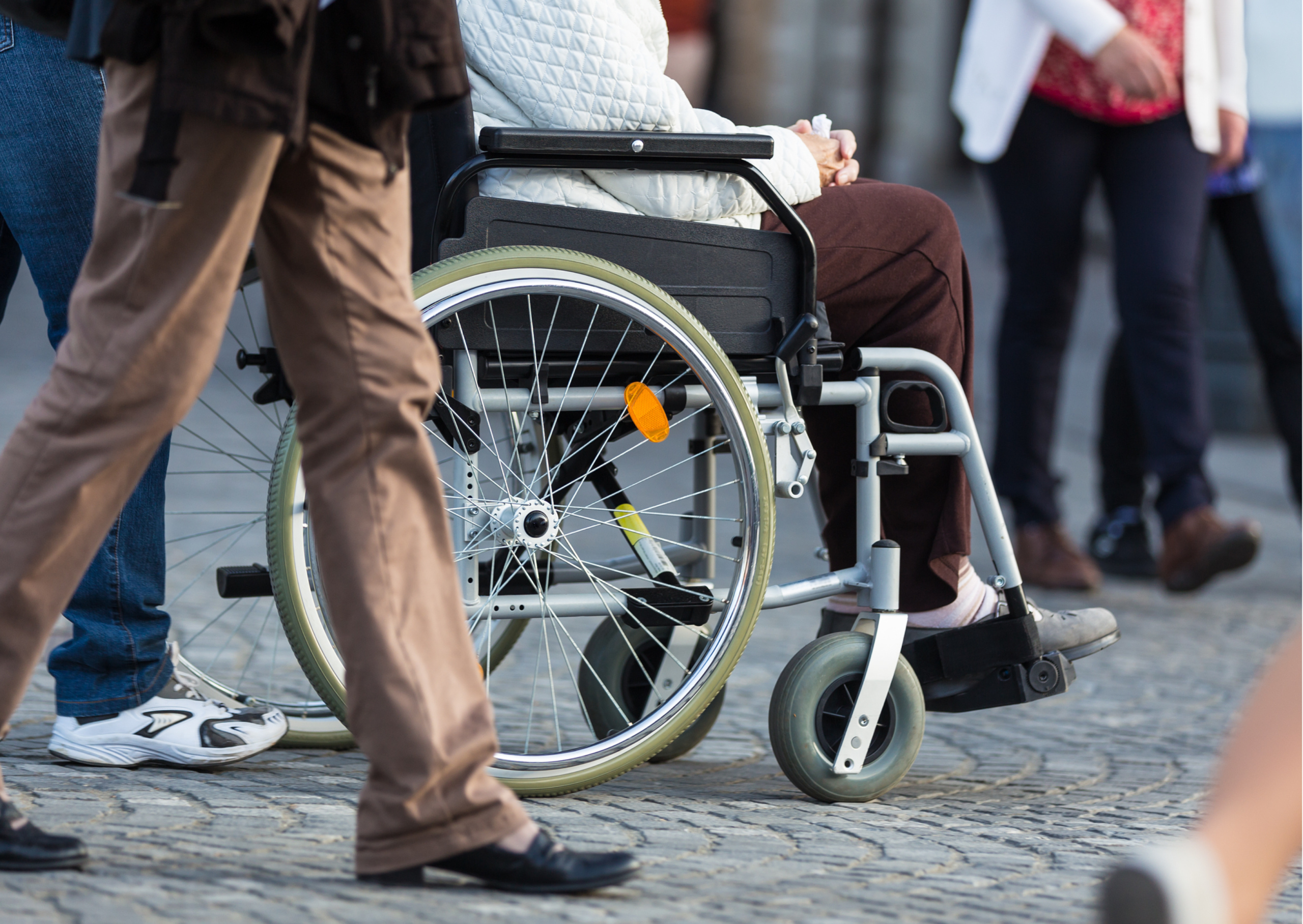
Simplified Access to MSF Disability Schemes at St Luke’s Community Clinic
To streamline service delivery for Persons with Disabilities (PwDs) applying for Ministry of Social and Family Development (MSF)’s disability schemes and services, MSF has introduced a Disability Verification Form (DVF) from 8 September 2025.
The DVF provides a formal verification of a person’s disability status. It must be completed by a Healthcare Professional (HCP), who will assess whether the individual meets baseline disability thresholds and/or has a specified condition.
At St Luke’s Community Clinic, our Healthcare Professionals can complete the DVF for you—providing a one-time verification with no need for repeated medical documents or assessments—making access to support faster and more convenient.
Who needs Disability Verification Support?
You should get the DVF form completed if you are applying for specific disability schemes offered under the Ministry of Social and Family Development (MSF). If you have previously attended Special Education (SPED) schools or have already had your disability verified for MSF schemes, you do not need to submit this form again

Eligibility for Healthier SG
- Has one of the conditions listed in Table A, OR
- Requires assistance with at least one activity of daily living (ADL) for at least 6 months from the date of assessment
- Achondroplasia
- Amputation of / born without at least 1 Foot, Leg Below Knee, or Leg Above Knee
- Amputation of / born without at least 1 Wrist, Arm Below Elbow, or Arm Above Elbow
- Arnold Chiari Malformations (Types 2 & 3 only)
- Cerebral Palsy
- Kennedy’s Disease
- Motor Neuron Disease / Amyotrophic Lateral Sclerosis
- Multiple Sclerosis
- Muscular Dystrophy
- Osteogenesis Imperfecta
- Post-Polio Syndrome
- Skeletal Dysplasia
- Spinal Cord Injury resulting in Mono-, Hemi-, Para-, Tri-, or Quadriplegia
(Note: HCPs must state the diagnosed condition within the DVF, as well as if the person has Mono-, Hemi-, Para-, Tri-, or Quadriplegia) - Spinal Muscular Atrophy (Types I, II, or III)
- Stroke (or other conditions) resulting in Mono-, Hemi-, Para-, Tri-, or Quadriplegia (Note: HCPs must state the diagnosed condition within the DVF, as well as if the person has Mono-, Hemi-, Para-, Tri-, or Quadriplegia)
- Spina Bifida (Closed Neural Tube Defects, Meningocele, or Myelomeningocele subtypes only)
- Spinocerebellar Ataxia
| Activity | Definition |
|---|---|
| Mobility: | Needs help to walk indoors or move in a wheelchair from room to room on level surface for about 8 metres (about twice the length of a clinic). This is regardless of the use of walking aid(s) and the speed of walking. |
| Washing or Bathing: | Needs help to wash body (excluding back) in the bath, shower or sponge / bed bath. Includes subcomponents of washing, rinsing and drying. |
| Dressing: | Needs help to put on, take off, secure and unfasten garments (upper and lower) and any braces, artificial limbs or other surgical appliances. |
| Feeding: | Needs help to feed oneself after food has been prepared and made available. |
| Toileting: | Needs help to use the toilet and manage bowel and bladder hygiene. Consists of (i) maintenance of balance during the act of urination or defecation and clothing adjustment, and (ii) maintaining perineal hygiene such as using toilet paper to clean the perineum. Independent of actual bowel or bowel functions e.g., incontinence. Does not include changing of long-term indwelling catheter. |
| Transferring: | Needs help to transfer from bed to an upright chair or wheelchair, and vice versa. Includes (i) sitting up from a lying position; (ii) moving from a sitting to standing position; (iii) a weight or pivot shift; and (iv) a controlled descent to a sitting position in another location. |
Physical impairment refers to either a total or partial loss of bodily functions such as the ability to walk, or a total or partial loss of a part of the body. It can result from congenital causes or acquired from serious illnesses or injury.

Step 1: Book your appointment
Step 2: Attend your scheduled appointment
What to Bring:
- NRIC
- Disability Verification Form
Step 3: Receive the Disability Verification Form
Operating Hours
Mon–Fri: 8.30 am –5.30 pm
Sat (selected services): 8.30 am–12.30 pm
Sun & PH: Closed
How To Get Here
We are located inside St Luke's Hospital.
Click above to view location.
Charges, Payment, Subsidies & Means Testing
Government subsidies are available for eligible patients. Click above to view more information about our charges and payments.
