Areas Of Care

Dementia Care

What is a Dementia?

Dementia is a condition which involves loss of memory, language, problem-solving and other cognitive abilities that are severe enough to interfere with daily life.


Dementia is typically caused by abnormal brain changes. Alzheimer’s disease is the most common cause of dementia.


These changes trigger a decline in cognitive abilities, severe enough to impair daily life and independent function. They also affect behaviour, feelings and relationships.

What are the signs and symptoms of Dementia?

  • Memory loss
  • Difficulty performing familiar tasks
  • Problem with language
  • Disorientation to time and place
  • Poor or impaired judgement
  • Problem keeping track of things
  • Misplacing things
  • Changes in mood and behaviour
  • Trouble with images and spatial relationships
  • Withdrawal from work or social activities

When is professional help needed?

Experiencing memory loss that affects daily life
Having difficulty with familiar tasks or managing daily routines

Showing changes in personality, mood or behaviour

Feeling confused, disoriented or lost even in familiar places

Facing challenges in communication or decision-making

Requiring support for caregivers to better manage care at home

The SLH Difference

Comprehensive Care, Every Step of the Way

From hospital to home, we provide a full spectrum of dementia care services — ensuring seamless and continuous support throughout your care journey.
Holistic Care Philosophy

Our Clinical, Social, Pastoral care model addresses your physical, social and emotional needs, restoring you beyond wellness to wholeness.

Award-Winning Excellence

Nationally recognised for service quality and innovation, we deliver dementia care that restores comfort, dignity and connection for patients and their loved ones.

Your Care, Our Collective Expertise

Our team of healthcare professionals works together to design a personalised care plan tailored to your unique needs.


Our Holistic Dementia Care Services

Our team manages symptoms so you can maintain comfort, dignity and connection:

  • Prescription and review of medications to manage behaviour, memory and mood
  • Symptom relief for anxiety, restlessness or sleep disturbances
  • Nutritional support and guidance to maintain health and prevent weight loss
  • Regular assessments to monitor cognitive and physical well-being
 

This also includes compassionate nursing care, with support for feeding, personal hygiene, toileting, and skin care to promote comfort and prevent complications.

Our rehabilitation team supports patients in maintaining comfort, independence, and dignity through personalised therapy, including:

Physiotherapy 

  • Exercises to work on walking, strength, balance, aerobic activity and flexibility to help in regaining functions
  • Pain-relieving techniques
  • Caregiver training and prescription of mobility aid upon discharge

Occupational Therapy 

  • Retraining on Activities of Daily Living (ADLs) and Instrumental Activities of Daily Living (IADLs)
  • Participating in meaningful activities
  • Prescription of suitable specialised equipment to maximise independence
  • Home modification
  • Caregiver training on behavioural techniques and activities to engage patients such as doll therapy, gardening, life book and Namaste Care

 Speech Therapy 

  • Swallowing and communication assessment and intervention
  • Caregiver training on swallowing management

Art Therapy 

  • Foster self-expression
  • Improve emotional well-being

Music Therapy

  • Improve interpersonal connections
  • Support physical and cognitive health

We journey with you and your family, offering practical, emotional and spiritual guidance along the way.

  • Recreational and group activities to encourage connection and participation
  • Counselling and social work support to address emotional, practical and financial concerns
  • Pastoral and spiritual care to bring comfort, hope and purpose

We support families and caregivers with knowledge, guidance and emotional care, helping them provide the best support for their loved ones.

  • Caregiver education and training to build confidence in dementia care
  • Support groups and counselling to strengthen emotional resilience 
  • Connecting families with community resources for sustained support

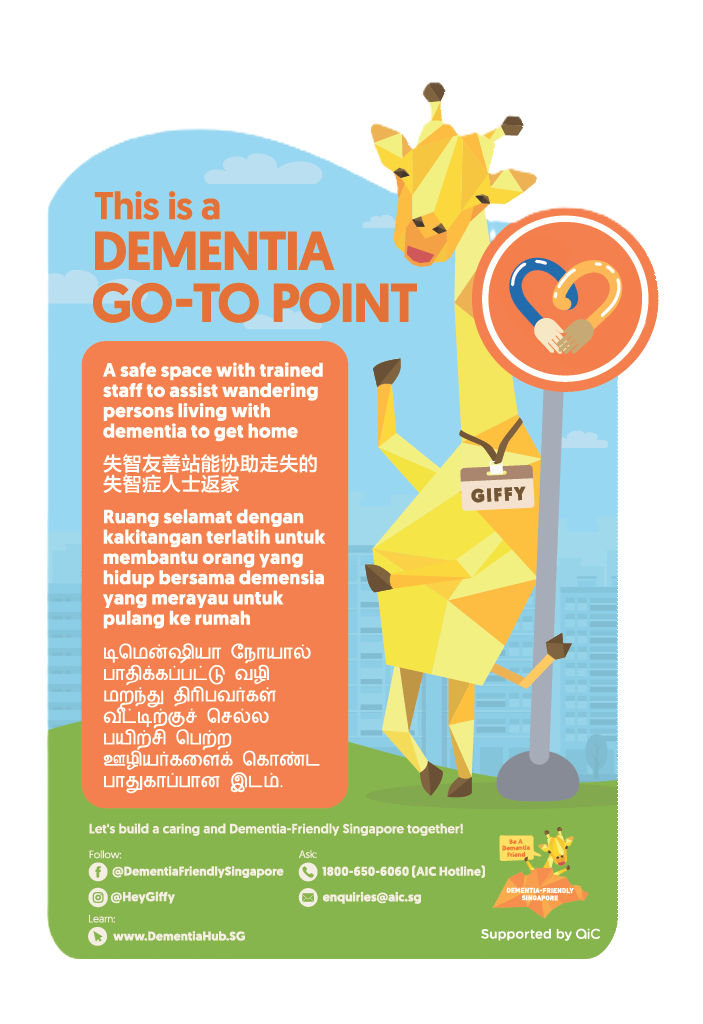
Dementia Go-To Point

St Luke’s Hospital is a designated Dementia Go-To Point (GTP)—a community touchpoint that provides information, resources, and referrals to dementia-related services.


We also serve as a safe return point for persons with dementia who appear lost or are unable to identify themselves or find their way home. Our trained staff will assist in identifying the individual and help reunite them with their caregivers.


If you are with someone who appears lost and may have dementia, please accompany them to St Luke’s Hospital. Approach our Security Guard, Service Ambassador, St Luke’s Community Clinic (office hours), or Ward 1D (after office hours), and our staff will be ready to assist.

Continuity of Care

At St Luke’s Hospital, we deliver holistic and personalised dementia care that extends beyond our wards.

Our integrated services ensure a smooth transition from hospital to home and community, providing continuous support every step of the way.

Government Subsidy

If you’re a Singapore Citizen or Permanent Resident, you may qualify for subsidies based on the National Means Test.

Reach out to check your eligibility — we’re here to help.

Frequently Asked Questions

ST LUKE’S HOSPITAL ADMITS PATIENTS WITH THE FOLLOWING PROFILE:

  • Any patient who is 40 years or older can be admitted for medical care and rehabilitation.
  • Of any race and religion; and
  • Medically stable for physical rehabilitation or continuing care.
  • For patients suffering from stroke, hip fracture, amputations and general de-conditioning post surgical / medical conditions


PATIENTS UNSUITABLE* FOR ADMISSION INCLUDE THOSE WHO:

  • Have unresolved social problems / discharge plan
  • Have drains, traction, or require heavy spinal nursing care
  • Require assisted ventilation

*Criteria for inpatient palliative care may differ from the above.

Yes. Patients have a choice of their step-down care institution. You may approach your primary team/doctor in your acute or primary care setting, or community hospital referral team of the hospital you are warded at and inform them of your choice.

Singapore citizens or permanent residents may select the ward class of their choice. We encourage you to choose the appropriate ward class, taking into account financial factors such as availability of insurance coverage and MediSave balance.

* Non-subsidised wards are available for non-resident patients.

The typical duration of each stay ranges from 2 to 4 weeks, depending on the individual needs and condition of each patient.

A discharge plan is a customised plan to cater to the patient’s care needs post discharge. Most patients are discharged to return home but with scheduled follow-up appointments at our Day Rehabilitation Centre, St Luke’s Community Clinic or with Home Care Services. Some patients may be discharged to long-term care facilities, such as nursing homes.

The cost of your hospital stay varies according to the admission type (Rehabilitation, Sub-acute Care or Palliative), length of stay and treatment needed. Please refer to our charges, payment and subsidies page for more information.