- Medically Reviewed By Dr Chia Tee Hien, Medical Director, Senior Consultant, St Luke's Hospital.
As parents and loved ones grow older, memory changes can cause worry. Is occasional forgetfulness a normal part of ageing, or could it be one of the early signs of dementia?
Understanding the difference between normal ageing and dementia can help families respond calmly and seek help early when needed.
Normal Ageing vs Dementia
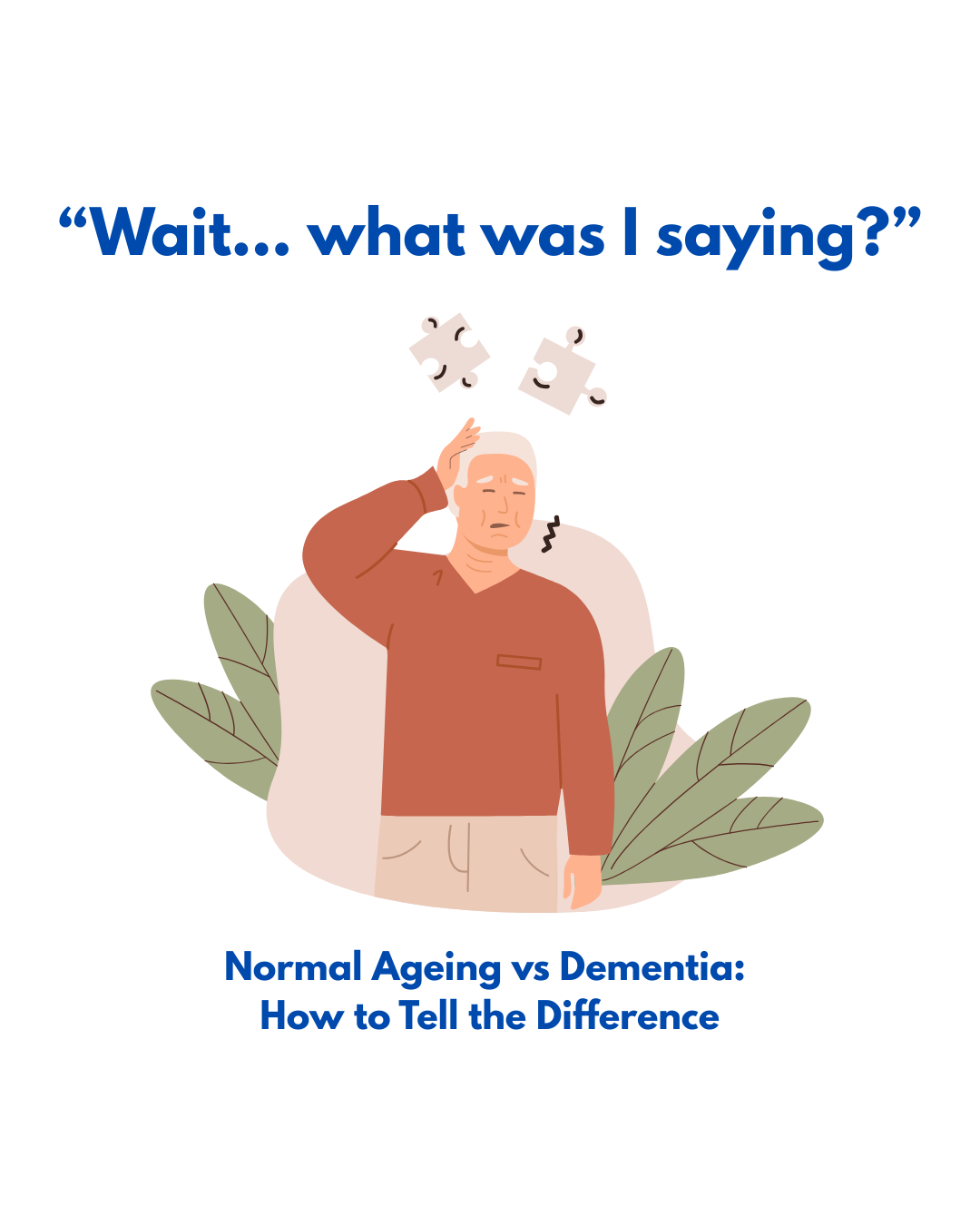
Is Memory Loss a Normal Part of Ageing?
Some mild forgetfulness is common as we age. Older adults may occasionally forget names, misplace items, or need more time to learn something new. However, they are usually able to recall the information later and continue managing daily responsibilities independently.
Normal ageing does not significantly affect judgement, safety, or the ability to carry out everyday tasks.
What Are the Early Signs of Dementia?
Dementia is not a normal part of ageing. It is a medical condition that affects memory, thinking, behaviour, and daily functioning. The most common type is Alzheimer’s disease.
Early signs of dementia may include repeated memory lapses, difficulty managing finances, getting lost in familiar places, or struggling to follow conversations. Over time, these changes begin to interfere with independence.

Mood and personality changes can also occur. A person may become more withdrawn, anxious, irritable, or lose interest in activities they once enjoyed. In many cases, they may not recognise these changes themselves.
The key difference between normal ageing and dementia is whether the symptoms are affecting daily life.
Key Difference - Impact on Daily Life
| Normal Ageing | Early Dementia |
|---|---|
|
Forget Occasionally |
Repeat Questions |
|
Slower Processing |
Difficulty Managing Tasks |
|
Aware of Memory Lapses |
Unaware of Problems |
Is Dementia Hereditary?
Many families worry about whether dementia runs in the family.
In most cases, dementia – including Alzheimer’s disease – is not directly inherited. It is usually linked to ageing and a combination of health, lifestyle, and genetic risk factors.
However, rare forms of early-onset dementia (before age 65) can run in families due to inherited gene changes. If several close relatives developed dementia at a young age, it is wise to speak to a doctor about your family history and concerns.
Related:

Are Changes in Mood, Behaviour, and Self-Awareness Early Signs of Dementia?
Memory loss isn’t the only early sign of dementia. Changes in mood or personality can also be warning signals.
An elderly loved one may become more anxious, irritable, suspicious, or withdrawn. They might lose interest in hobbies, avoid social situations, or show poor judgment in familiar settings.
While mood shifts can be related to depression, loneliness, or other health issues, noticeable changes in character—especially alongside memory problems—should not be ignored.
One important difference between normal ageing and dementia is self-awareness. Older adults with typical forgetfulness usually recognise it and may even joke about it. In contrast, those in the early stages of dementia often lack insight into their difficulties and may deny there is a problem, even when others see clear signs.
Related:

Could Memory Problems Be Caused by Something Else?
Not all memory problems mean dementia. Conditions such as vitamin deficiencies, thyroid disorders, depression, medication side effects, infections, and sleep problems can mimic dementia symptoms. Many of these causes are treatable.
This is why medical evaluation is important if symptoms are persistent, worsening, or interfering with daily activities.
When Should You Seek Help?
If memory or behavioural changes begin affecting safety, finances, medication management, or everyday routines, it is time to consult a healthcare professional. Early diagnosis allows families to understand what is happening, explore treatment options, and plan ahead with greater clarity.
Concerned About Memory Changes?
If you are unsure whether what you are noticing is normal ageing or early dementia, it is always better to seek advice rather than wait.
St Luke’s Hospital offers cognitive screening, assessment, and guidance for individuals and families concerned about memory changes. Early evaluation can provide reassurance, identify treatable causes, and ensure timely support if dementia is diagnosed.

You may also wish to visit our Dementia FAQ section to learn more about early symptoms, diagnosis, treatment options, and caregiver support.
Seeking help early can make a meaningful difference — for both you and your loved one.