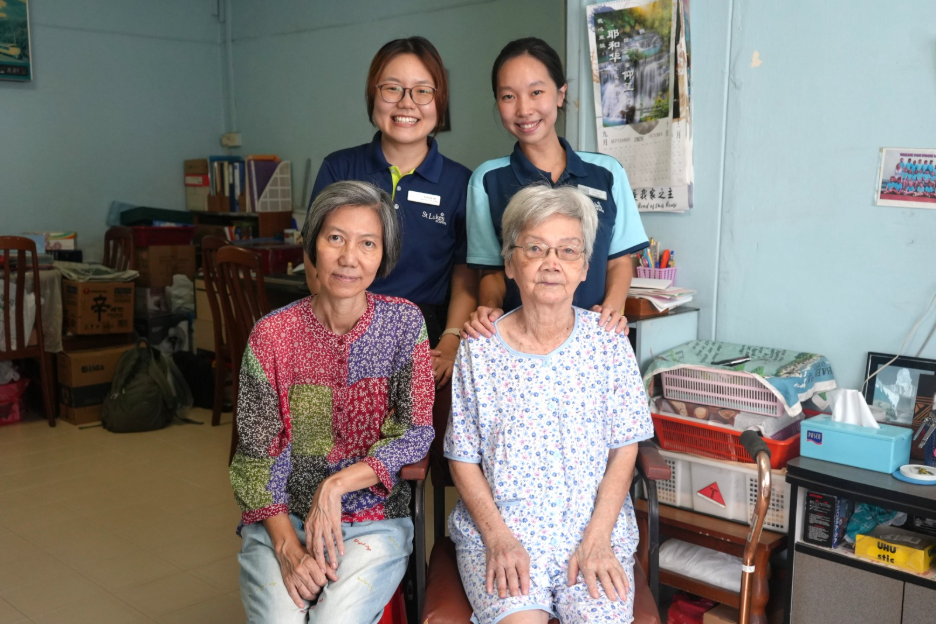
Bottom (L-R): Catherine Tan, Betty Tan
When Catherine first discovered that her sister Betty might have dementia, the single 64-year-old was at a loss.
Having cared for her late mother and already caring for her eldest sister with dementia, Catherine was stretched thin. Between managing her sisters’ daily care needs and frequent medical appointments, she struggled to find time for herself. Now, Catherine worried she would not be able to take on the challenges of being the primary caregiver for two sisters.
Betty was transferred to St Luke’s Hospital (SLH) for rehabilitation after a fall at home left her with a broken arm. Upon admission, the team noticed other symptoms and identified that she likely had mixed dementia.
Recognising Catherine’s concerns about her ability to cope with caregiving, the sisters were referred to SLH’s Community Intervention Team (COMIT): an allied health-led, multi-disciplinary team providing holistic support for persons living with dementia and their caregivers.
After her discharge, the COMIT team continued to follow up with the family, supporting them as they transitioned to the community.
Navigating a New Season
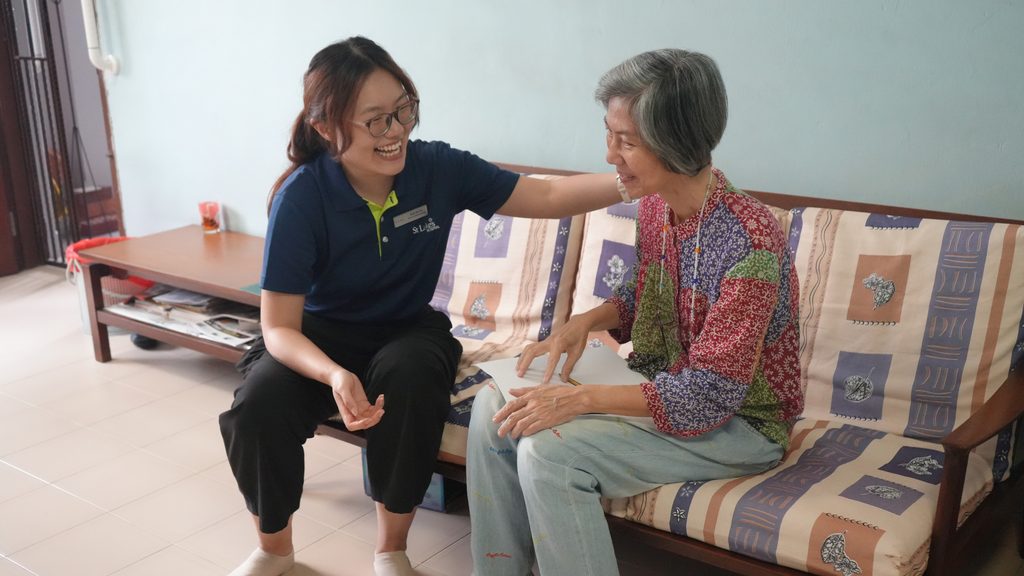
When Medical Social Worker Koh Ee Lin first visited the sisters, Catherine expressed difficulties caring for Betty at home. Betty often had issues attending to her Activities of Daily Living (ADLs), such as showering, eating medication, and going for a haircut. She would raise her voice at Catherine when asked to do so. She also struggled with sleeping, often waking up several times during the night.
Ee Lin worked closely with both sisters – providing psychoeducation to Catherine so she could better understand Betty’s condition and support her with her ADLs. She also introduced various activities they could do together at home.
During home visits, she engaged Betty in reminiscence therapy. Over time, Betty opened up: she used to be a teacher aide at an international school and was an athlete and avid swimmer in her youth.
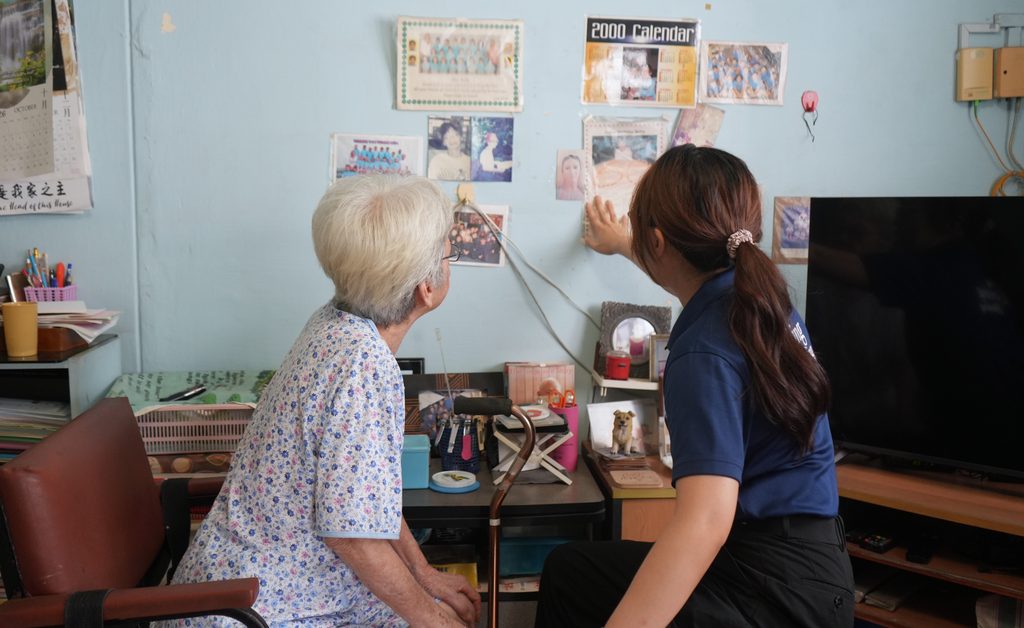
The team also noticed that Betty seldom left home and was unengaged for most of the day. She spent her days idling, sleeping, or watching TV.
Senior Occupational Therapist Tiffany Tam stepped in to support, working with the sisters to establish a routine for Betty and manage her behaviours. During visits, she would assist Betty with simple grooming tasks like brushing her teeth and trimming her nails — things that Catherine had struggled with. Practising writing on worksheets also helped to keep Betty mentally active while regaining confidence to use her arm again.
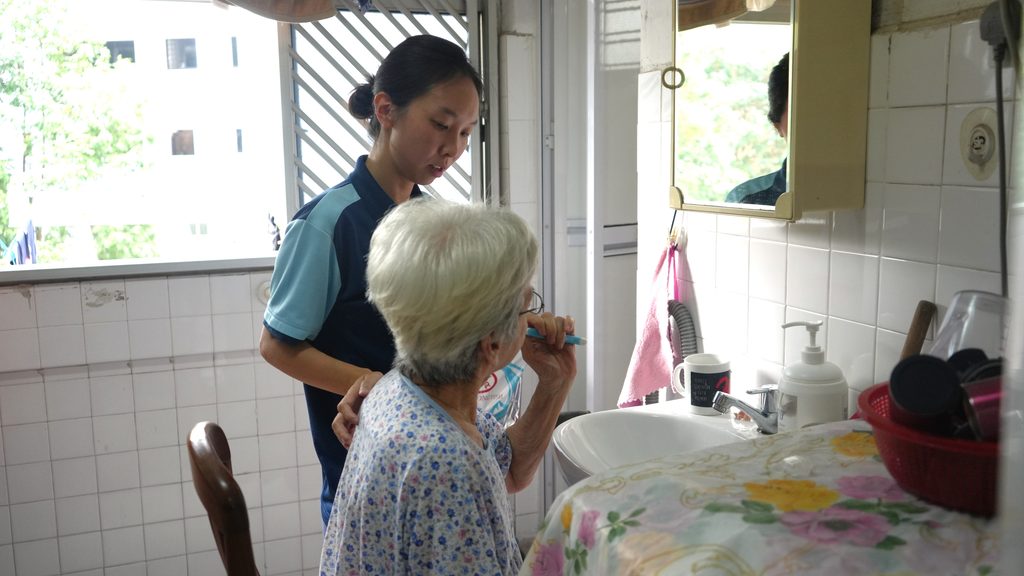
Apart from working with Betty, Tiffany also taught Catherine and their helper how to continue such activities independently at home.
Over time, Betty has become more receptive to activities in her daily routine. She also attends weekly Rummy-O sessions at the nearby Active Ageing Centre and even goes downstairs for walks occasionally with her helper.
“I feel very heartened,” Ee Lin shared, reflecting on the improvements both sisters made along their journey.
“Moments like these give meaning to the work that I do – supporting clients and caregivers through person-centred care that improves their quality of life and allows them to continue making meaningful memories together.” – Koh Ee Lin, Medical Social Worker
A Community of Care and Support
The team also introduced Catherine to SLH’s Dementia Caregiver Support Group. During the monthly sessions, participants learn from invited speakers and exchange mutual support with other caregivers.
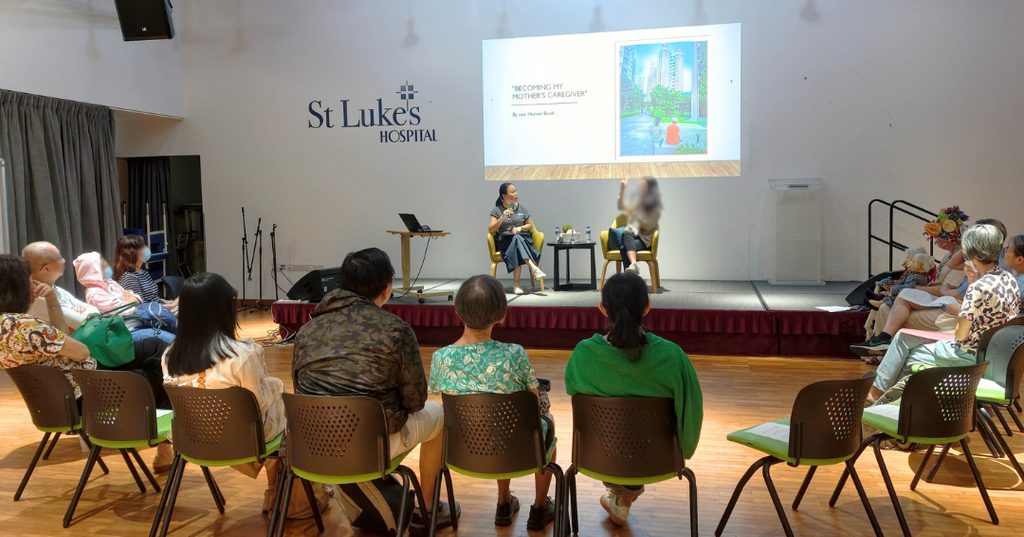
Catherine finds comfort in meeting fellow caregivers, even though they might not be facing the exact same circumstances. “I feel less alone now,” she shared, adding that she looks forward to each session and even introduced some of her church friends to join the group.
Acknowledging that the caregiving journey can be a long and challenging one, Catherine hopes her own sharing can encourage others. “It is important to find time for yourself, so you can come back refreshed,” she added. She continues to make time for herself through simple moments, going out for weekly dinners and reading during her commute.