When 50-year-old Mr Kong Chee Sum was referred to St Luke’s Hospital (SLH), the visible concern was a leg wound caused by poorly controlled diabetes.
As the days passed, it became clear that the wound was only the surface of a deeper story.
More Than a Wound
Mr Kong lives with Dandy-Walker Malformation (DWM), a congenital condition that affects both physical and cognitive development.
He processes information differently and can become distressed when routines change or when he does not fully understand what is happening around him.
Being in an unfamiliar hospital environment was overwhelming. At times, he would cry when he felt confused or anxious.
Care, therefore, required more than dressings and medication. It required patience, reassurance, and consistency.
The wound care team worked carefully to protect his fragile skin and reduce infection risks. Crusting technique was applied to keep the wound dry, while foam dressing helped to cushion the skin and prevent further breakdown.
Ward staff took time to explain each procedure gently and clearly. Chaplains sat with him when he felt worried, offering steady reassurance and emotional support.
Medical Social Worker Crystal Cheong noticed his love for art — a simple but powerful window to connection. She introduced colouring sheets and word-search games, and encouraged him to join leisure therapy sessions where he could interact with others in a structured, safe setting.
“I was very happy during my stay at SLH,” Mr Kong shared. “I especially enjoyed sessions where I got to do art and grow plants.”
Recognising the family’s financial constraints, Crystal also helped him apply for the SLH Patient Welfare Fund, easing the burden of medical bills and ambulance costs on top of government subsidies.
She also sourced for a donated walking stick to help him move around more safely and with greater independence.
After three months of steady progress, he was ready for discharge.
The question was: what would life look like once he returned home?
Continuing Care in the Community
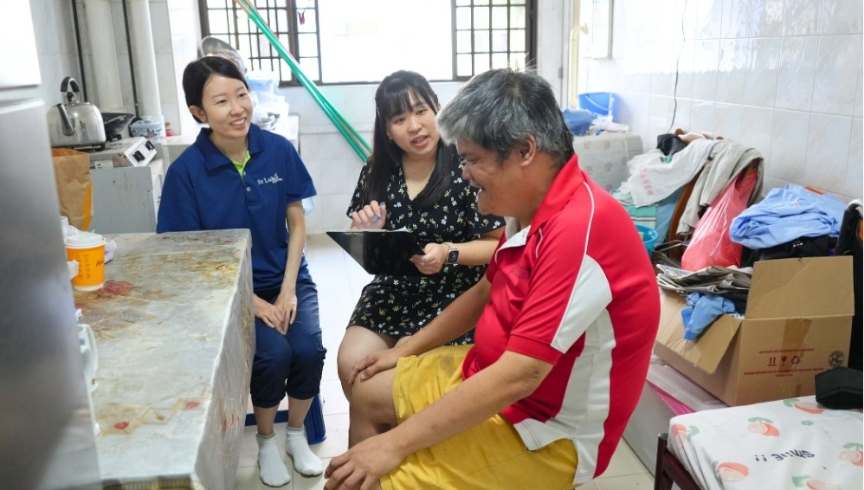
For decades, Mr Kong and his elderly parents had managed quietly on their own — without formal support, financial assistance, or a broader care network.
Mr Kong’s elderly parents had been his sole caregivers.
As they grew older and faced their own health challenges, daily caregiving had become increasingly demanding.
Their limited understanding of his intellectual disability often left them unsure of how best to support him.
His mother, Mdm Tan, shared that when he felt overwhelmed at home, he would sometimes shout loudly — so loudly that neighbours had previously called the police.
Without intervention, the family risked returning to the same cycle of strain and isolation.
The team stepped in to ensure the family would not have to manage alone.
Crystal and Care Coordinator Lydia Cheong linked the family to a social service agency specialising in supporting persons with intellectual disabilities. Home nursing and community case management services were arranged near their residence.
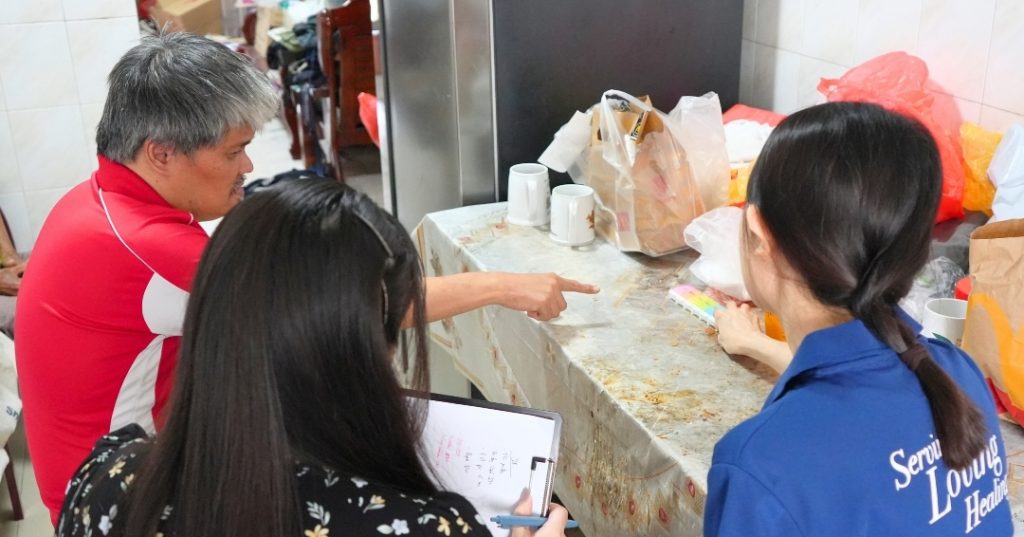
But referrals alone were not enough. Crystal and Lydia continued conducting joint home visits.
They accompanied the family to their first appointment with the new social service agency, ensuring the transition was not intimidating or confusing.
“Providing care does not stop at discharge,” Crystal shared. “We wanted to ensure Mr Kong and his parents are supported for the long term.”
Today, Mr Kong’s wound has fully healed.
More importantly, he and his parents are now surrounded by a support system — one that understands his needs, strengthens his caregivers, and walks with them beyond the hospital walls.
What began as treatment for a diabetic wound became something much bigger — a bridge to community support, stability, and hope for the years ahead.