In February 2025, Ms Tan Lay Kiot, 56, noticed a pimple-looking patch with a black spot on her back.
“I didn’t think it was serious as it wasn’t painful, so I just applied some cream and went on with my day,” she recalled.
Within weeks, the swelling worsened and eventually grew into the size of a fist.
She then tried traditional Chinese medicine for relief, but the medication only made her legs swell.
When Ms Tan was finally admitted to an acute hospital, doctors diagnosed her with an infected large upper back carbuncle and had to perform a saucerisation surgery to remove the infected tissue.
A Close Brush with Death
She later developed septic shock, suffering from dangerously low blood pressure and severe vasodilation and had to be put on intravenous (IV) antibiotics for MSSA bacteremia (a bloodstream infection caused by Staphylococcus aureus).
On top of that, she was newly diagnosed with Type 2 Diabetes Mellitus (T2DM) and developed Diabetic Ketoacidosis (DKA), a life-threatening complication that occurs when the body produces excess blood acids (ketones).
“It was terrifying,” she said. “I didn’t expect a small wound to lead to something so serious.”
Doctors at the acute hospital proposed another operation – a skin graft – to help her large wound heal faster and reduce the risk of further infection.
But the experience of her earlier complications left her traumatised.
“I was afraid of going through surgery again,” Ms Tan admitted.
A Second Chance
On 17 March 2025, Ms Tan was transferred to St Luke’s Hospital (SLH) for subacute wound care and continued IV antibiotic treatment.
She opted for non-surgical wound management even though it would take longer for her wound to heal.
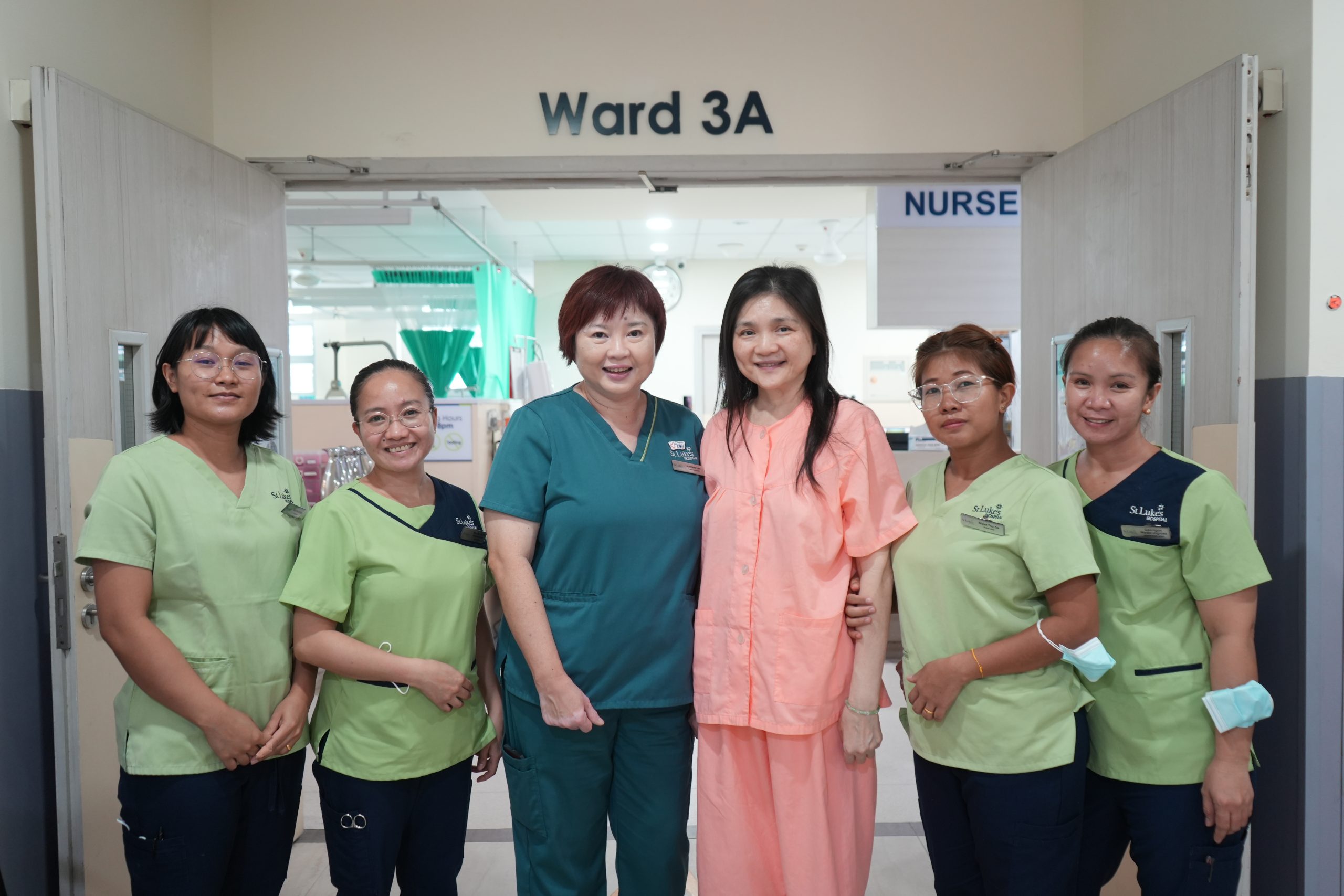
At SLH, she met Nurse Manager Jasmine Tan, who carefully explained the wound care process and reassured her about the recovery plan.

“Initially, Ms Tan was unsure if her big wound could be healed completely. However, the consistent, gradual changes in the positive direction of her wound healing deepened her trust and confidence in SLH’s wound management,” Jasmine said.
When Ms Tan first arrived at SLH, her wound was extensive – measuring 31.1 cm by 39.5 cm.
She was placed on Negative Pressure Wound Therapy (NPWT) for about five months to promote healing.
Under Jasmine’s care and the dedication of the nursing team, Ms Tan’s wound size reduced to just 1.2cm by 2.1cm with no signs of infection in just six months – half the time doctors initially predicted.
Best of all, she didn’t need the feared skin graft surgery.
Finding Strength and Purpose Again
Before her illness, Ms Tan ran two organic product shops in the heartlands with her sister – one in Bukit Batok and another in Teck Whye.
The shops drew customers of all ages and grew steadily through word of mouth.
Now, as she prepares to be discharged, Ms Tan is filled with gratitude and optimism.
“I have to be careful when bathing because my skin is still fragile,” she said. “But I’m very thankful to all the loving and considerate nurses who took care of me at SLH.”