It began with a sudden wave of giddiness — brief, unexpected, and deeply unsettling.
In that moment, Albert knew something was wrong.
He immediately asked his wife to call an ambulance. At the hospital, doctors confirmed that he had suffered a stroke.
Until then, life had been ordinary in the best possible way. His days were filled with work, exercise after office hours, and attending church services regularly — a familiar routine that brought comfort, purpose, and stability.
Then, in an instant, everything changed.
The left side of Albert’s body became immobilised. Even the simplest movements suddenly felt impossible. The life he had always known came to an abrupt halt, replaced by silence, stillness, and the overwhelming realisation of how quickly everything had changed.
Recovery did not come overnight.
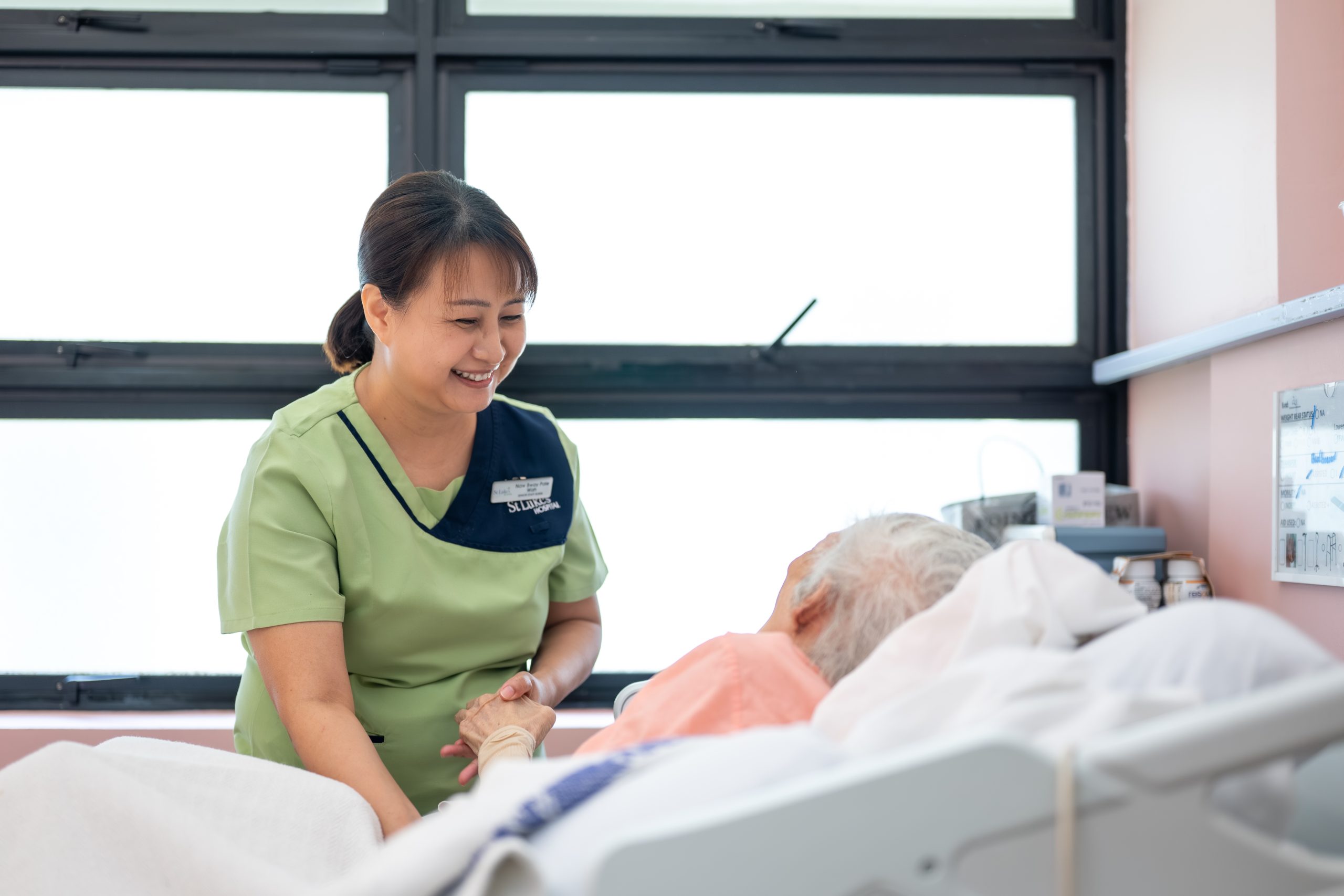
Transferred to St Luke’s Hospital, Albert began his rehabilitation journey, supported closely by the care team every step of the way.
One day, while resting in the ward, he heard the sound of a guitar playing nearby. The familiar melody stirred something within him.
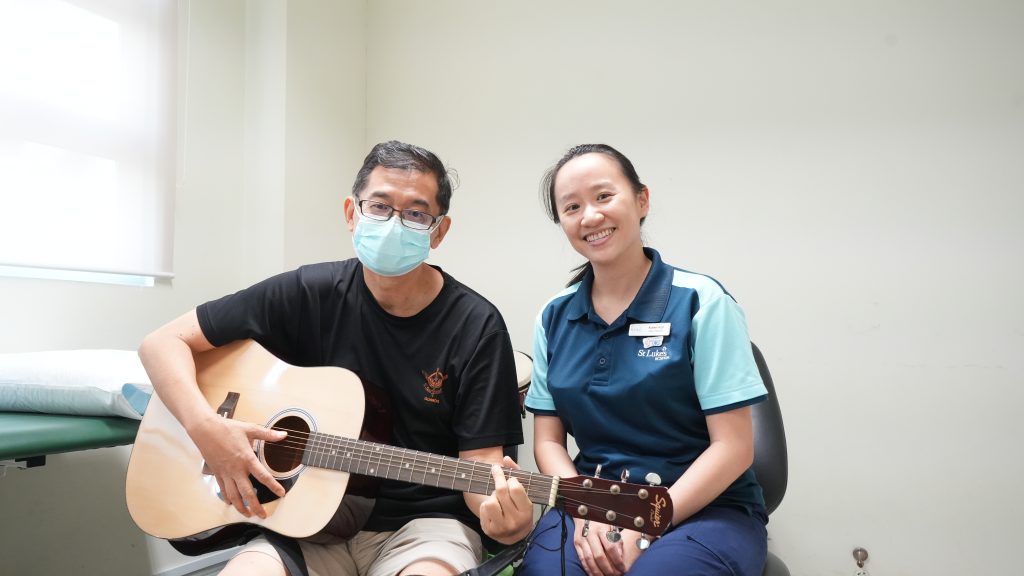
Before his stroke, Albert had served as a vocalist and guitarist in a small worship group at church. Drawn to the music, he decided to explore music therapy as part of his recovery journey.
Music therapist Karen gently introduced him to the kalimba, also known as “thumb piano”, using simple rhythms and guided beats to help rebuild coordination and control in his hand.
At first, progress was barely noticeable. A slight movement. A little more control. Small victories that might have seemed insignificant to others but meant everything to him.
But slowly and quietly, hope began to return alongside strength.
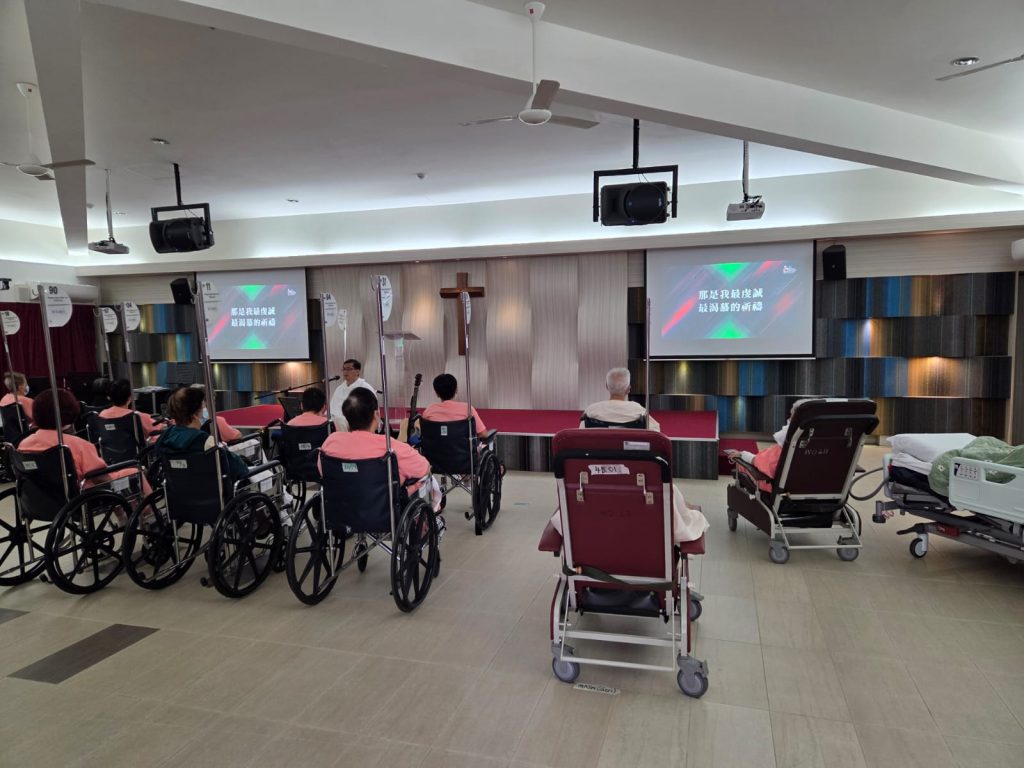
Through the ups and downs of recovery, Albert found comfort not only in rehabilitation, but also in faith and music. During a patient devotion session, Albert shared his journey of recovery and testimony through song, singing “牵我的手” in Hokkien and “一生爱你” in Mandarin. The heartfelt performance deeply moved both patients and staff present.
Even after discharge, Albert remained committed to his recovery.
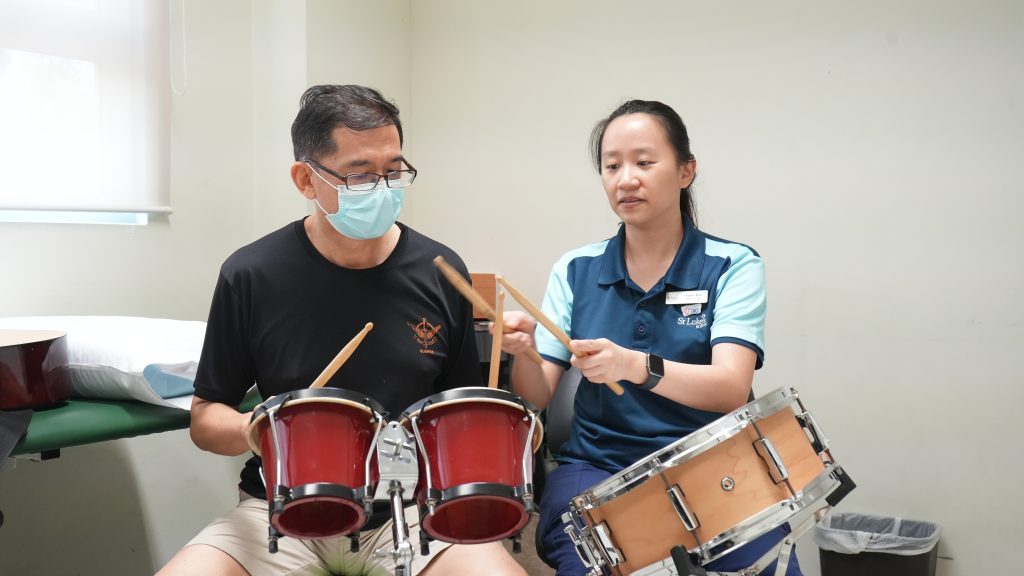
Returning as an outpatient to the Day Rehabilitation Centre, he continued with music therapy, gradually progressing from the kalimba to the drums, and eventually back to playing the guitar again.
Alongside music therapy, Albert also underwent physiotherapy and occupational therapy, steadily rebuilding balance, mobility, coordination and strength in a steady, structured way.
As his condition improved, his goals began to evolve as well.
Recovery was no longer only about regaining what he had lost, but becoming stronger, healthier, and more resilient than before.
Encouraged by the team, Albert also participated in programmes at Gym Up, which supports older adults in improving daily function through fitness while enhancing overall quality of life.
To maintain his long-term health and independence, Albert continues receiving care at St Luke’s Community Clinic (SLCC) through regular consultations and medication management.
Now gradually easing back to work, he approaches life with a renewed mindset — taking each day one step at a time, while continuing to care for his health, strengthen his faith, and support those around him.
Along the way, Albert also found himself deeply encouraged by something he quietly observed throughout his recovery journey: many former patients eventually returned, not as recipients of care, but as volunteers hoping to encourage others still walking the same path. One day, he hopes to do the same.
His message to others facing recovery is simple:
“Do not give up. Healing may take time, but every small step forward still matters.”